

Teaching, and Lifelong Learning
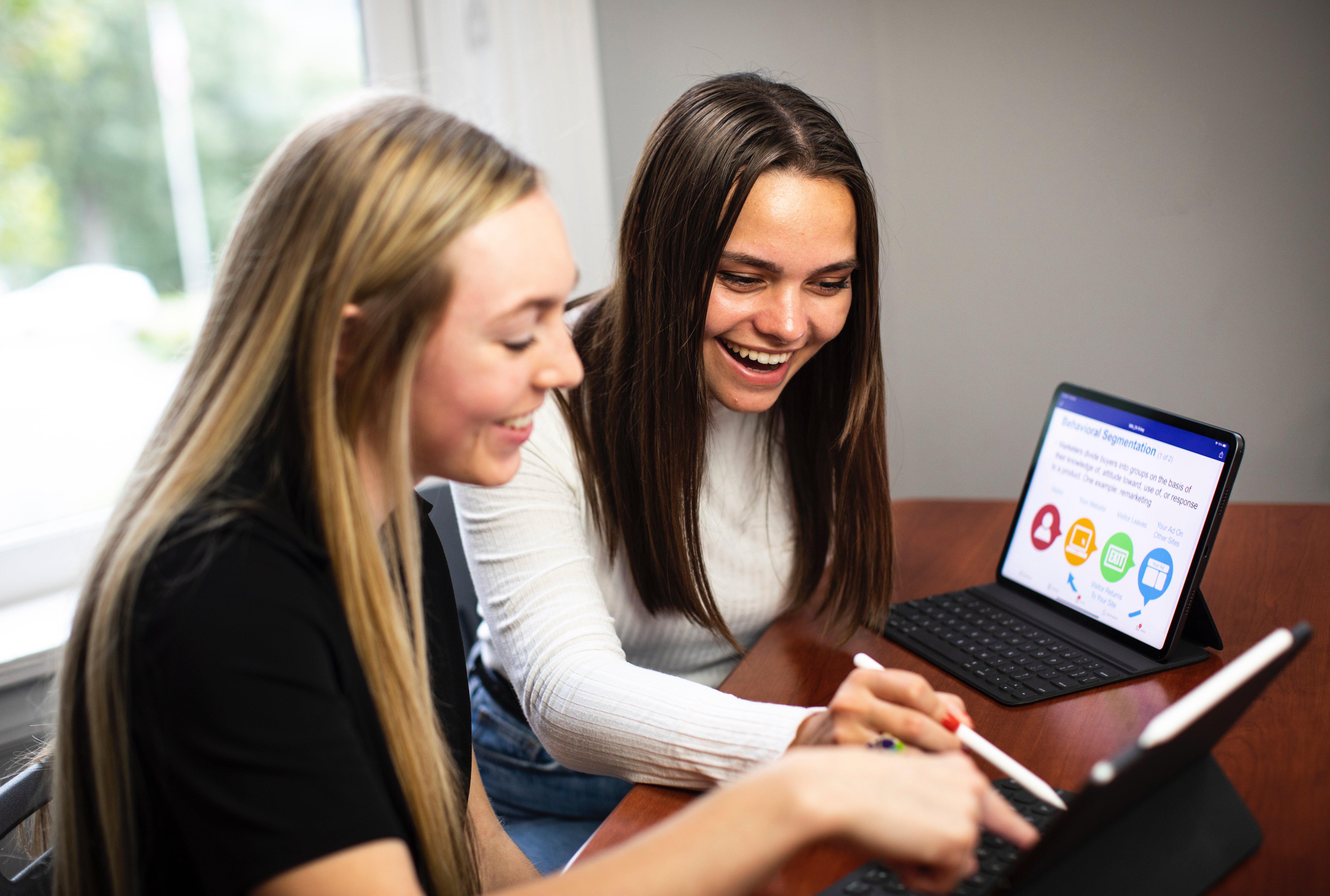
I often say this is the hardest job I’ve ever had—and the best job I’ve ever had. My number one responsibility here, unlike other places, is to love students, uplift them, and focus on their learning as they prepare to launch into the world. I couldn’t love this work more.
Teaching requires every little bit of my brain if I’m going to do it well. Learning how to teach is a lifelong pursuit. The more I learn about it, the more I realize how much there is tolearn, practice, and become. I originally came to teaching with ideas stuck in the past—ideas that, while compelling, were not empirically supported.
The traditional lecture is one of those ideas. We tend to view lecturing as the quintessential college experience. But here’s the thing: students simply don’t retain much from a straight-up lecture. Passive listening doesn't force active engagement, so retention stays low. Active learning may look like students are just having fun rather than “learning”; however, evidence shows that active learning works far better.
Students don’t always realize that. They often feel like they learn more through a traditional lecture—even rating lecturing professors higher—a phenomenon known as the “illusion of fluency.” Perception is not reality.
Here’s what the data shows: when students in active learning classes were compared with those in lecture-based classes, lectures increased failure rates by over 50%. Exam scores were consistently higher when students instead were taught using active learning.
We also know that uninterrupted lecturing quickly overwhelms working memory. You don’t retain as much because working memory cannot process long, continuous chunks of information effectively.
On the flip side, retrieval practice dramatically improves memory retention. Self-quizzing works far better than highlighting a textbook.
Real learning requires failure, stumbling, and often feeling incompetent. I constantly encourage my students to tolerate these uncomfortable feelings and embrace them as necessary steps toward growth. If you aren’t uncomfortable, are you really learning?
The same goes for me as a teacher. If I’m not occasionally wondering whether I know what I’m doing, then I’m not pushing myself enough to learn more. I like that teaching is hard. I love that it demands genuine effort.
Most of all, I love connecting with my classes. When I see a student “get it”—make a connection and light up with a love of learning—those are the moments that bring me deep joy. Knowing I can make a difference is my favorite part of this work.
I’m grateful to be here, surrounded by colleagues dedicated to helping students succeed. I don’t know of any other university where I would have this kind of experience and opportunity. Go Knights!

About the Author
I absolutely love connecting with young adults. Teaching, mentoring and being around the students here at Southern Virginia University is like a dream come true. Teaching is like dancing down a hallway and throwing open all the doors to possibility. There are so many different ways to find interest, excitement and meaning in the world of psychology; that hallway has unlimited doors ready to fling open! Come find out what creates the spark for you.